

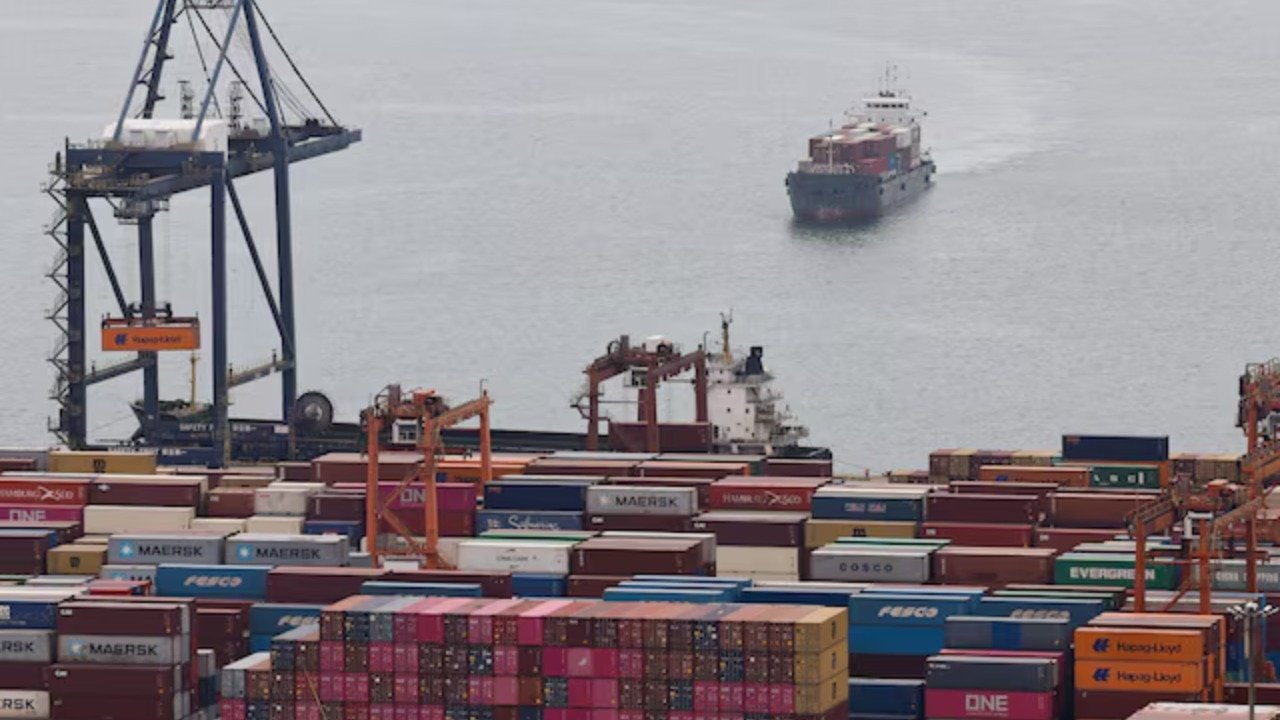

The United States and China have initiated the imposition of extra charges on shipping companies transporting various goods, including holiday items and crude oil, marking the ocean as a significant battleground in the ongoing trade dispute between the world’s top two economies.
Last week, there were signs of a potential escalation to a full-scale trade conflict after China announced an extensive expansion of its controls on rare earth minerals exports, prompting President Donald Trump to threaten a substantial increase in tariffs on Chinese products to triple digits.
However, following the weekend, efforts were made by both sides to calm traders and investors, emphasizing collaboration between their negotiating teams and the potential for finding a resolution.
China confirmed the implementation of additional charges on vessels owned, operated, built, or flagged by the US, with exceptions for Chinese-built ships from these levies, as detailed by state broadcaster CCTV.
The specifics of exemptions were outlined, which also cover empty ships entering Chinese shipyards for maintenance, mirroring the US approach where the new fees are to be collected at the initial port of entry for a single voyage or the first five voyages within a year.
Xclusiv Shipbrokers based in Athens warned of a reciprocal escalation in maritime taxation between the two nations, potentially disrupting global freight patterns.
Earlier this year, the Trump administration unveiled plans to impose charges on Chinese-affiliated vessels to reduce China’s dominance in the global maritime industry and support American shipbuilding.
An investigation conducted during the previous Biden administration found evidence of China’s unfair tactics in dominating maritime, logistics, and shipbuilding sectors globally, justifying the imposition of penalties.
In retaliation, China announced its own port charges on US-affiliated vessels on the same day the US fees came into effect.
Independent analyst Ed Finley-Richardson noted that amidst the chaos, efforts were being made to find solutions, with reports of US shipowners diverting cargoes to other countries while en route to avoid the new charges.
Analysts anticipate that COSCO, a Chinese container carrier, will bear a significant portion of the $3.2 billion anticipated cost from the US fees in 2026.
Leading container lines such as Maersk, Hapag-Lloyd, and CMA CGM mitigated their exposure by rerouting Chinese-affiliated vessels away from US shipping routes, following negotiations that led to reduced fees and exemptions for various vessels after objections from industries like agriculture, energy, and US shipping.
The Office of the United States Trade Representative (USTR) did not provide an immediate response to requests for comment.
The Chinese commerce ministry stated on Tuesday that China is prepared to face off against the US if necessary, but the option for dialogue remains open.
Additionally, Beijing imposed sanctions on five US-affiliated subsidiaries of South Korean shipbuilder Hanwha Ocean for allegedly supporting a US investigation into Chinese trade practices.
Hanwha, a major shipbuilding company, owns Philly Shipyard in the US and has contracts