

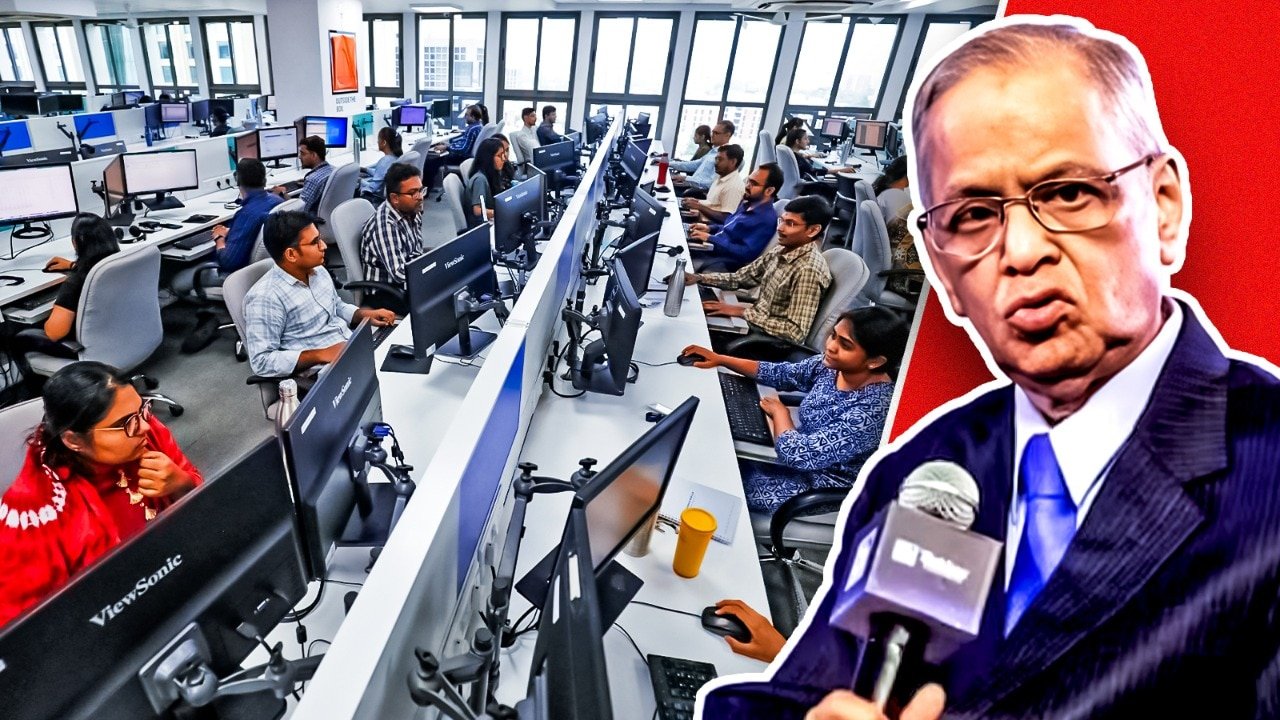

Infosys co-founder Narayana Murthy has been advocating for a 72-hour workweek, emphasizing the necessity for Indian youth to exert significant effort for the country to achieve its full potential and transition into a developed nation. Murthy’s stance has drawn criticism for neglecting the importance of work-life balance in a culture where excessive work hours are prevalent. The implementation of the new Labour Codes on November 21 has restricted workweeks to 48 hours, replacing 29 existing central labor laws with the goal of streamlining and modernizing India’s labor regulations.
Despite maintaining the 48-hour workweek limit, the Labour Codes offer increased flexibility in structuring weekly schedules, allowing for variations such as four extended days, five moderate days, or six standard days of work. This flexibility permits workweeks spanning from 8 to 12 hours per day, with a maximum of 12 hours over four days. Kartik Narayan, CEO of Apna Jobs Marketplace, highlighted that this framework strikes a balance between employer flexibility and worker safety and consistency.
The Code on Wages stipulates that employees must be granted a day of rest within every seven-day cycle. The 48-hour weekly limit aligns with the recommendations of the International Labor Organization (ILO). Overtime work exceeding the specified hours will require consent from employees and payment of at least double the standard wage rate, according to the revised Labor Codes.
While the Labor Codes aim to harmonize employer flexibility with employee benefits, doubts remain regarding their effective enforcement in a country where regulatory compliance is often lacking, particularly within the unorganized sector. Concerns have been raised about the actual adherence to the regulations, especially given influential figures like Narayana Murthy and SN Subrahmanyan endorsing extended work hours, despite global trends shifting towards a shorter workweek.
SN Subrahmanyan, Chairman of L&T, went even further than Murthy by proposing a 90-hour workweek, sparking controversy and renewing discussions on the significance of maintaining a healthy work-life balance. The Labor Codes, which were introduced on November 21, coincided with Narayana Murthy’s endorsement of China’s 9-9-6 work model, which involves a 72-hour workweek. The 9-9-6 model, previously prevalent in Chinese tech firms, required employees to work from 9 am to 9 pm, six days a week, before China transitioned to a 44-hour workweek.
Although the new Labor Codes necessitate increased pay for overtime work, skepticism remains regarding their practical application, particularly within the tech industry due to potential financial implications and concerns over job security. The regulations have also been criticized for potentially reinforcing hire-and-fire practices within tech companies. As the Labor Codes maintain the 48-hour workweek limit, observers suggest that their effectiveness hinges on the willingness of business leaders, like Narayana Murthy, to prioritize work-life balance over extended work hours.