

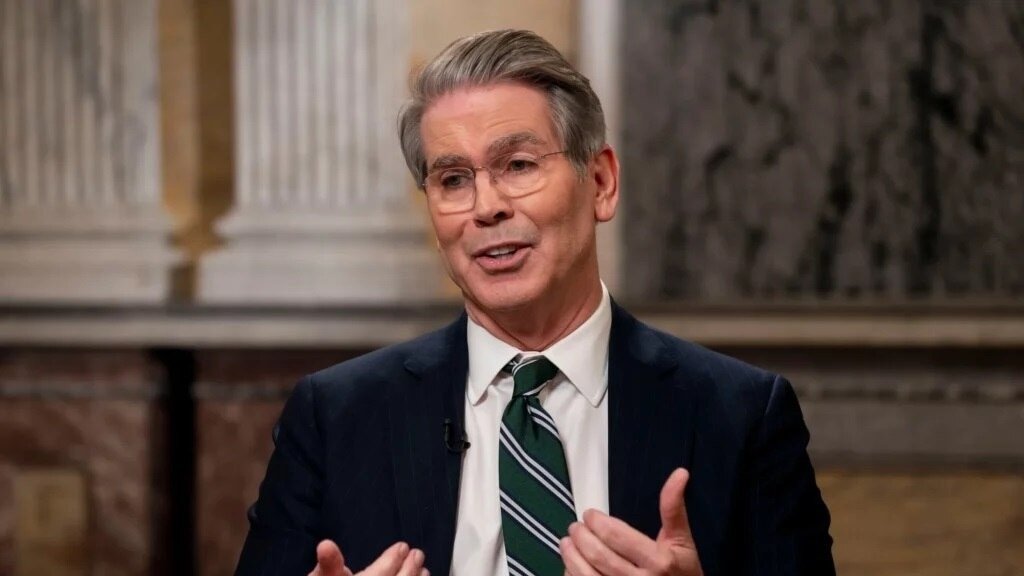

US Treasury Secretary Scott Bessent announced on Wednesday that Washington would collaborate closely with its allies, including India, to develop a comprehensive collective response to China’s recent limitations on rare earth minerals exports. This decision comes amid escalating tensions between the two largest global economies regarding control over crucial mineral resources crucial for technology, energy, and defense sectors.
In an interview with CNBC, Bessent emphasized the intention to engage with European allies, Australia, Canada, India, and other Asian democracies to formulate a unified response. He highlighted concerns that Chinese bureaucrats may not efficiently manage global supply chains and manufacturing processes.
The move follows Beijing’s imposition of export restrictions on rare earth materials, citing national security reasons and accusing foreign entities of utilizing Chinese minerals for military applications.
China currently dominates the worldwide rare earth market, accounting for approximately 70% of mining activities and around 90% of mineral processing essential for electronics, automobiles, renewable energy, and defense systems manufacturing. The United States, the European Union, and India rank among the primary importers of Chinese rare earth elements, raising fears of supply disruptions due to Beijing’s export limitations.
US President Donald Trump criticized China’s actions, threatening to impose 100% tariffs on Chinese goods. The White House characterized China’s decision as an attempt to weaponize its rare earth dominance for geopolitical leverage.
Bessent underscored the expectation of unified support from partner nations, including India, in addressing China’s export restrictions. He mentioned ongoing communication with allies and anticipated substantial global backing from Europe, India, and Asian democracies.
Concurrently, the US imposed an additional 50% tariff on imports from India, despite acknowledging New Delhi as a crucial partner in securing supply chains. India, with limited rare earth reserves, continues to encounter domestic manufacturing challenges.
President Trump later moderated his stance following the tariff threats, expressing on social media platform Truth Social a willingness to assist China in overcoming economic difficulties. The proposed 100% tariff on Chinese imports, initially set for November 1, remains part of the US strategy.