

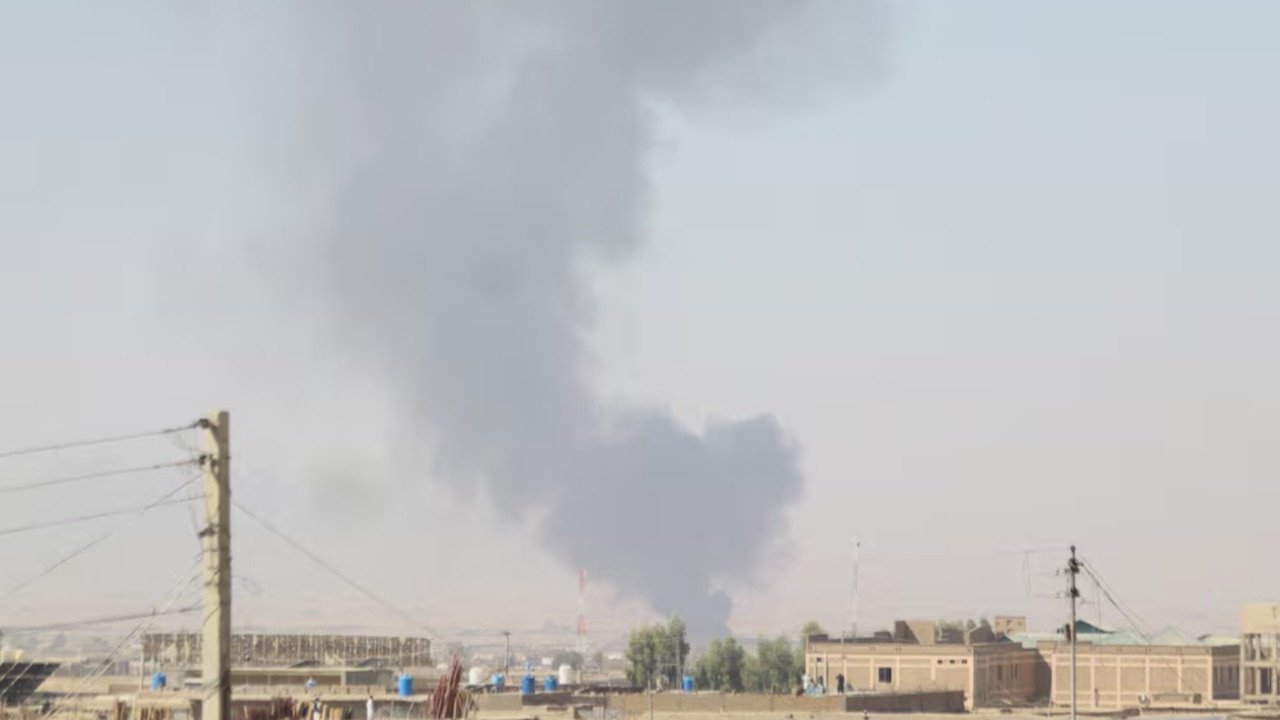

Pakistan and the Afghan Taliban administration have agreed to a temporary ceasefire lasting 48 hours, starting at 6 pm (Pakistan Standard Time) on Wednesday. This decision comes after a series of intense air and ground battles that resulted in over a dozen civilian fatalities and approximately 100 injuries along the volatile border, according to reports from Reuters.
The recent clashes represent the most severe escalation of violence between the two nations since the Taliban regained control of Kabul in 2021, disrupting a fragile peace that had been maintained following skirmishes over the weekend.
A 48-hour truce has been announced by Pakistan’s foreign ministry with the objective of reducing hostilities and initiating a pathway for dialogue, following the recent surge in fighting along the volatile border.
Both parties have committed to making sincere efforts to seek a positive resolution to what Islamabad described as a complex yet solvable issue. The ministry emphasized that the cessation of hostilities aims to facilitate diplomatic discussions and prevent further loss of life.
Taliban spokesperson Zabihullah Mujahid stated that Kabul has instructed its forces to adhere to the ceasefire, provided that Pakistan refrains from aggressive actions. He highlighted that the ceasefire was initiated at the insistence of the Pakistani side.
The conflict arose when Pakistan demanded that the Afghan Taliban control militants responsible for incursions into Pakistan, alleging that they were operating from safe havens across the border.
The Taliban refutes these accusations and accuses Pakistan of disseminating false information to stoke tensions, as well as allegedly harboring ISIS-affiliated militants to destabilize Afghanistan. Pakistan’s military has denied these allegations.
Following intense clashes in Afghanistan’s Kandahar province, where Pakistani forces reportedly conducted airstrikes early on Wednesday, the ceasefire was declared. Afghan authorities reported that the airstrikes targeted residential areas in Spin Boldak district, resulting in the deaths of at least 15 civilians and injuries to over 100 individuals, including women and children.
As the conflict escalated, Taliban fighters claimed to have eliminated a significant number of Pakistani soldiers and seized weaponry and armored vehicles. A video circulating on social media purportedly showed Taliban fighters in possession of a Pakistani T-55 tank captured during clashes in Kandahar.
The ceasefire was prompted by heightened tensions and military confrontations, with both sides exchanging blame for ground assaults. Pakistan denied targeting Afghan civilians and reported injuries to four of its citizens in Taliban attacks in the Chaman district across the border. In Orakzai, clashes between Pakistani troops and militants resulted in casualties on both sides.
The clashes have led to the closure of border crossings, disrupting trade and leaving numerous vehicles carrying goods stranded. Given Pakistan’s crucial role as a supplier of essential items to landlocked Afghanistan, the fighting has exacerbated the humanitarian crisis in the region.
The escalation of hostilities has drawn international concern, with China urging protection for its citizens and investments, Russia advocating for restraint, and US President Donald Trump offering mediation to resolve the conflict.
In light of the escalating violence, Pakistan has sought urgent mediation from Qatar and Saudi Arabia. Islamabad has implored both countries to intervene promptly and help prevent a full-scale conflict.
The ongoing border violence has displaced thousands of residents, with most border crossings between the two countries closed for over a week.
These recent hostilities mark a significant deterioration in relations between Pakistan and Afghanistan since the Taliban’s resurgence in 2021. Islamabad has accused Kabul of providing shelter to militants from Tehreek-e-Taliban Pakistan (TTP), which has carried out deadly attacks on Pakistani forces in recent months.
Tensions were further exacerbated when Pakistan conducted airstrikes in Kabul targeting alleged TTP camps, a move that was strongly condemned by the Taliban.
In a sign of diplomatic strain, Afghanistan reportedly rejected visa requests from Pakistan’s defense minister, ISI chief, and two senior military officials multiple times, leading to a suspension of high-level contact with the Taliban government by Pakistan.
The crisis coincides with Afghan Foreign Minister Amir Khan Muttaqi’s visit to India, the first since the Taliban assumed power. India’s plans to reopen its embassy in Kabul and enhance engagement with the Taliban administration have been perceived in Islamabad as a fresh diplomatic setback.