

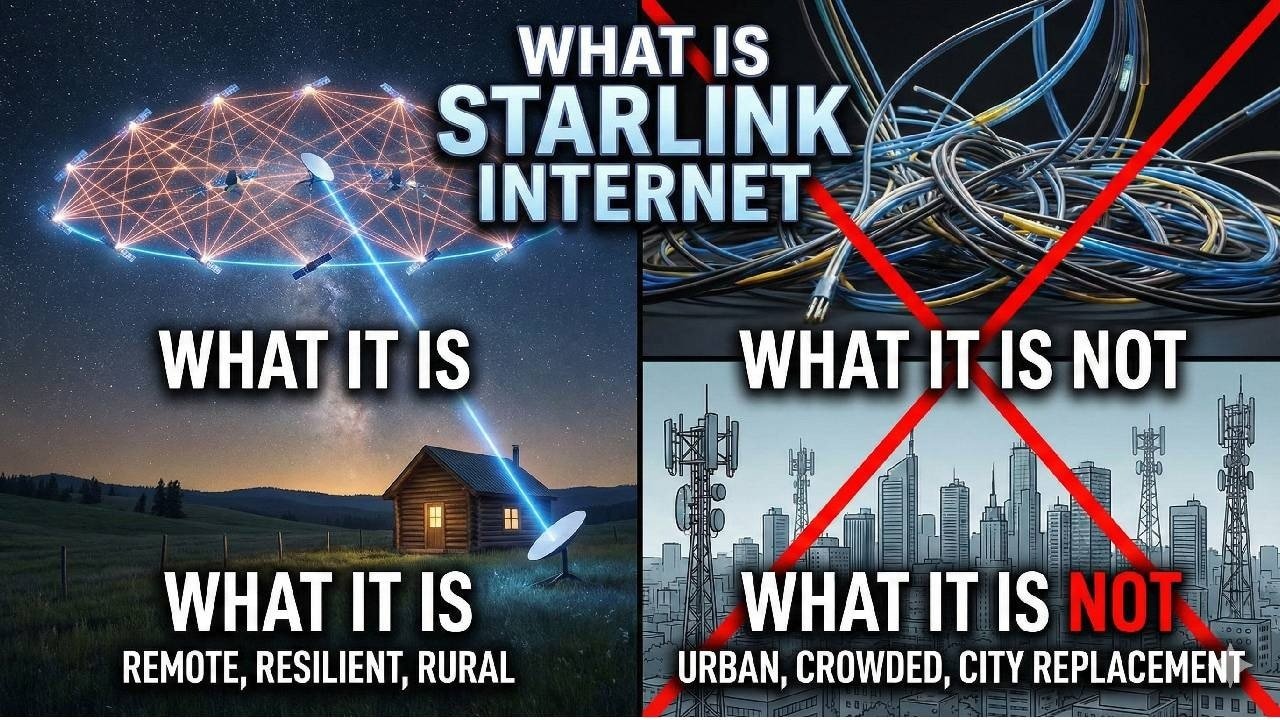

Starlink, a venture under Space Exploration Technologies Corp., also known as SpaceX and led by Elon Musk, has garnered attention as a provider of high-speed internet from space. The technology operates through a network of satellites in low Earth orbit, unlike traditional satellites in geostationary orbit. This close proximity allows for faster data transmission and lower latency, offering internet services comparable to ground-based connections.
The uniqueness of Starlink lies in its laser mesh system, where satellites communicate not only with ground stations but also with each other using laser links. This setup ensures network resilience, demonstrated when the system bypassed physical cable disruptions on Earth by maintaining connectivity through inter-satellite data transfer. Musk highlighted Starlink’s role as a global backup for internet infrastructure, unaffected by terrestrial disturbances.
Primarily targeting remote and underserved regions, Starlink aims to bridge the digital divide by providing connectivity in areas lacking traditional infrastructure. In scenarios like natural disasters, where conventional networks may fail, Starlink’s space-based infrastructure remains operational, often offering free access during emergencies as part of SpaceX’s humanitarian policy.
However, Musk emphasized that Starlink is not designed as a replacement for urban areas with established fiber optic and 5G networks. Due to its satellite beam’s limited data capacity, Starlink may only serve a small percentage of densely populated cities, making it more suitable for rural or underserved locations. While a remarkable technological feat, Starlink’s current limitations prevent it from directly competing with urban telecom giants in high-density environments.