

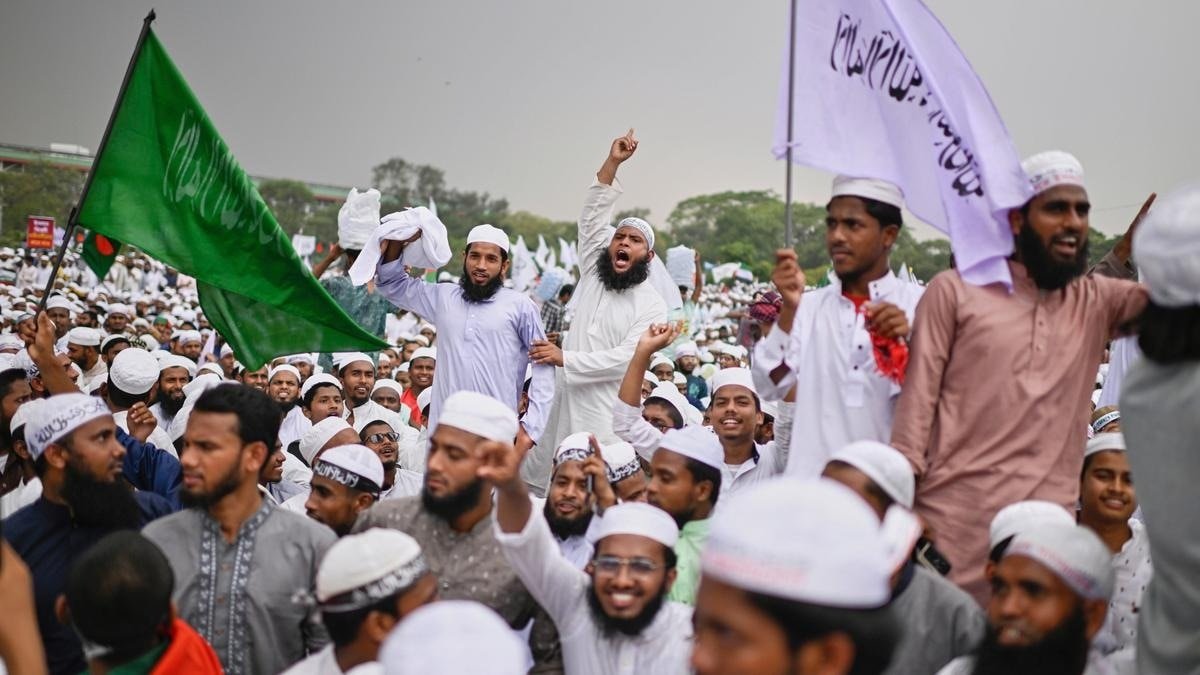

After Friday prayers, significant gatherings of Islamist groups, including Hefazat-e-Islam and Intifada Bangladesh, were observed in major Bangladeshi cities like Dhaka and Chattogram. These groups demanded a ban on the International Society for Krishna Consciousness (ISKCON), labeling it as an “extremist Hindutva organization.”
The call to ban ISKCON stems from a High Court plea where Bangladesh’s interim administration under Muhammad Yunus categorized ISKCON as a “religious fundamentalist organization.” This request follows recent attacks on Hindu temples and ISKCON centers in Bangladesh, along with the imprisonment of Krishna Das Prabhu, a former ISKCON member advocating for minority rights post the fall of the Sheikh Hasina government in August 2024.
In response to reports of violence against minority communities being dismissed as media-driven narratives, Dhaka has shifted its stance towards Islamabad post-Hasina era, allowing Islamist groups to gain prominence under the apparent protection of the state.
During a rally outside Dhaka’s Baitul Mukarram National Mosque, Intifada Bangladesh laid out six demands, including a ban on ISKCON and calls for investigations and legal actions against the organization. Notably, Jasimuddin Rahmani, leader of the al-Qaida-affiliated Ansarullah Bangla Team, described ISKCON as an extremist group allegedly created by Jews, emphasizing the urgency to ban it.
Members of Intifada Bangladesh and Hefazat-e-Islam in Chattogram also demanded the prohibition of ISKCON, likening it to banning political parties and holding officials accountable for misconduct. Accusations were made against ISKCON for allegedly acting against Muslims and colluding with foreign entities to advance Hindutva ideologies.
The heightened scrutiny on ISKCON in Bangladesh post the fall of the Hasina government has led to protests, vandalization of ISKCON properties, and the imprisonment of prominent leaders. Financial investigations and allegations of criminal activities have further exacerbated the situation for ISKCON members.
Despite claims by Islamist groups, ISKCON has a long-standing history of humanitarian efforts in Bangladesh, providing essential services regardless of faith affiliations. The current push to ban ISKCON reflects the increasing influence of Islamist factions in Bangladeshi politics and their sway over government decisions, despite dismissals of such concerns by the Yunus administration.