

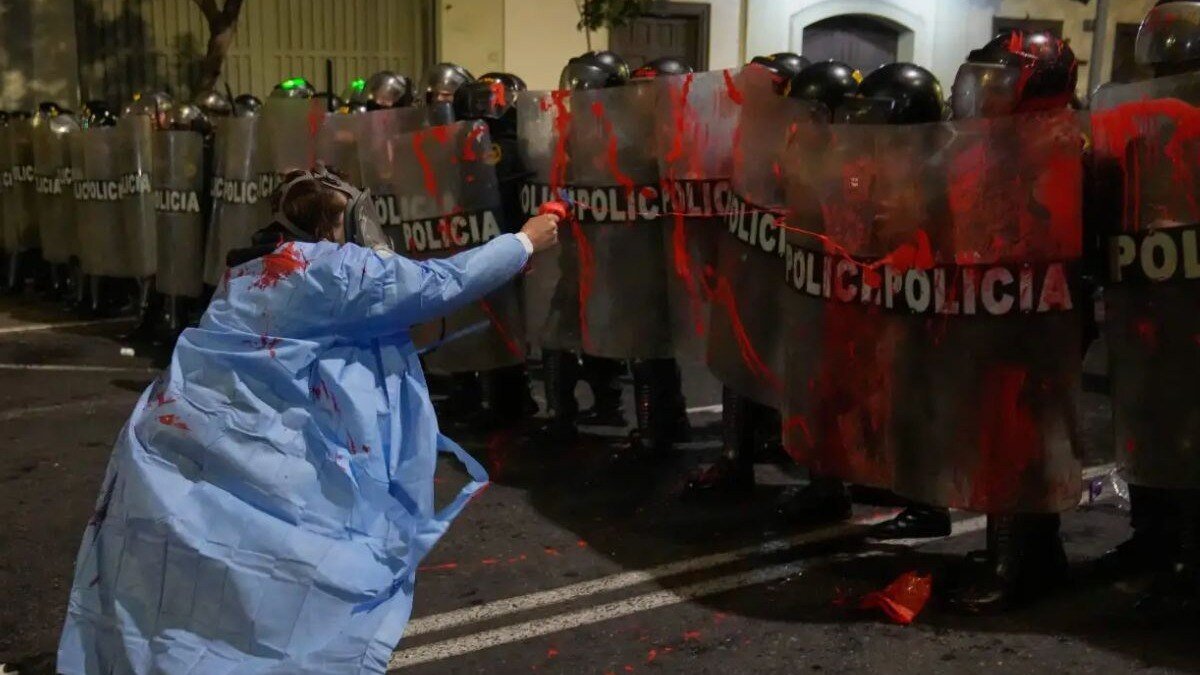

Peru’s President Jos Jer stood firm on Thursday, refusing to step down despite the death of a protester during a large demonstration led by Gen Z activists calling for his resignation. The incident left about 100 individuals injured, including 80 police officers and 10 journalists. Authorities are investigating the fatal shooting of the protester.
Addressing the media after visiting Peru’s Parliament, President Jer emphasized his commitment to maintaining the country’s stability amidst the ongoing unrest. The protests initially focused on demands for improved pensions and wages for the youth but have since evolved to encompass broader issues like crime, corruption, and public disillusionment with the government.
The demonstrations turned violent as the prosecutor’s office in Peru launched an inquiry into the death of a 32-year-old protester, Eduardo Ruz, who was allegedly shot during the mass protest. Video footage and witness accounts showed Ruz collapsing on a Lima street, allegedly shot by a man suspected to be an undercover police officer among the protesters. The clashes resulted in injuries to numerous protesters, police officers, and journalists.
The upheaval in Peru reflects a global trend of youth-led protests against governments, with demonstrations also unfolding in various other countries. The recent political turmoil in Peru follows the removal of former President Dina Boluarte, paving the way for President Jer to assume office. The new government’s response to the protests has been met with mixed reactions, with criticisms leveled against President Jer and his administration.
The escalating tensions in Peru serve as a culmination of years of frustration among the populace, marked by corruption scandals and a sense of disillusionment with successive leadership. The protests have reignited concerns over state capacity, insecurity, and corruption in the country, driving many to voice their discontent on the streets.
As the protests continue, demonstrators have called for the resignation of President Jer and the repeal of laws perceived to benefit criminal elements. The scenes of unrest and public outcry underscore the deep-seated grievances and demands for accountability within Peruvian society, echoing a broader sentiment of discontent with governance and social inequities.