

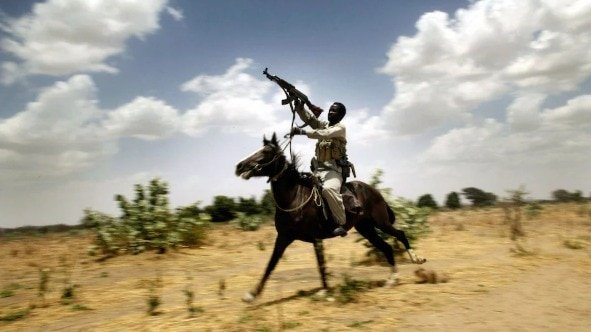

In the late 1980s, Sudan’s dictator Omar al-Bashir commissioned a brutal militia known as the Janjaweed, earning a reputation for extreme violence in Africa’s contemporary conflicts. Riding on horseback, armed and supported by al-Bashir, these militants ravaged Darfur, pillaging, murdering, and raping without restraint. The Janjaweed’s leader, Hemedti, quickly rose to power, seizing control of land and resources, including Sudan’s lucrative gold mines, amidst a chaotic political landscape.
Fast forward to the present day, the Janjaweed, now rebranded as the Rapid Support Forces (RSF), have transitioned to using pickup trucks and drones under Hemedti’s leadership. The humanitarian crisis in Sudan has escalated to catastrophic levels, with millions displaced, widespread famine-like conditions, and a significant loss of life, yet the global response remains inadequate.
Recent events saw the RSF capturing El-Fasher, the capital of North Darfur, from the Sudanese army, leading to reports of mass executions and escalating violence. Satellite images revealed the city soaked in blood, symbolizing the extreme brutality inflicted by the RSF on Darfur’s residents.
The root of Sudan’s crisis lies in a complex web of power struggles and historical conflicts. The ousting of Omar al-Bashir in 2019 led to a power vacuum, sparking a deadly clash between General Abdel Fattah al-Burhan and Hemedti over control and resources. The ongoing civil war has further divided the nation, with the RSF challenging the army’s authority and exacerbating the already dire humanitarian situation.
The RSF’s stronghold in Darfur, fueled by control over gold mines and external support, poses a significant threat to Sudan’s stability. The militia’s brutal tactics, including ethnic targeting and mass atrocities, have drawn international condemnation. The involvement of external actors and the exploitation of Sudan’s resources, particularly gold, have deepened the conflict and prolonged the suffering of the Sudanese people.
As Sudan teeters on the brink of further fragmentation, the specter of past atrocities looms large. The RSF’s resurgence in Darfur signifies a dangerous escalation, with the potential to plunge the country into deeper turmoil and division. The international community’s response and efforts towards peace and stability in Sudan remain crucial in averting a full-blown humanitarian catastrophe.