

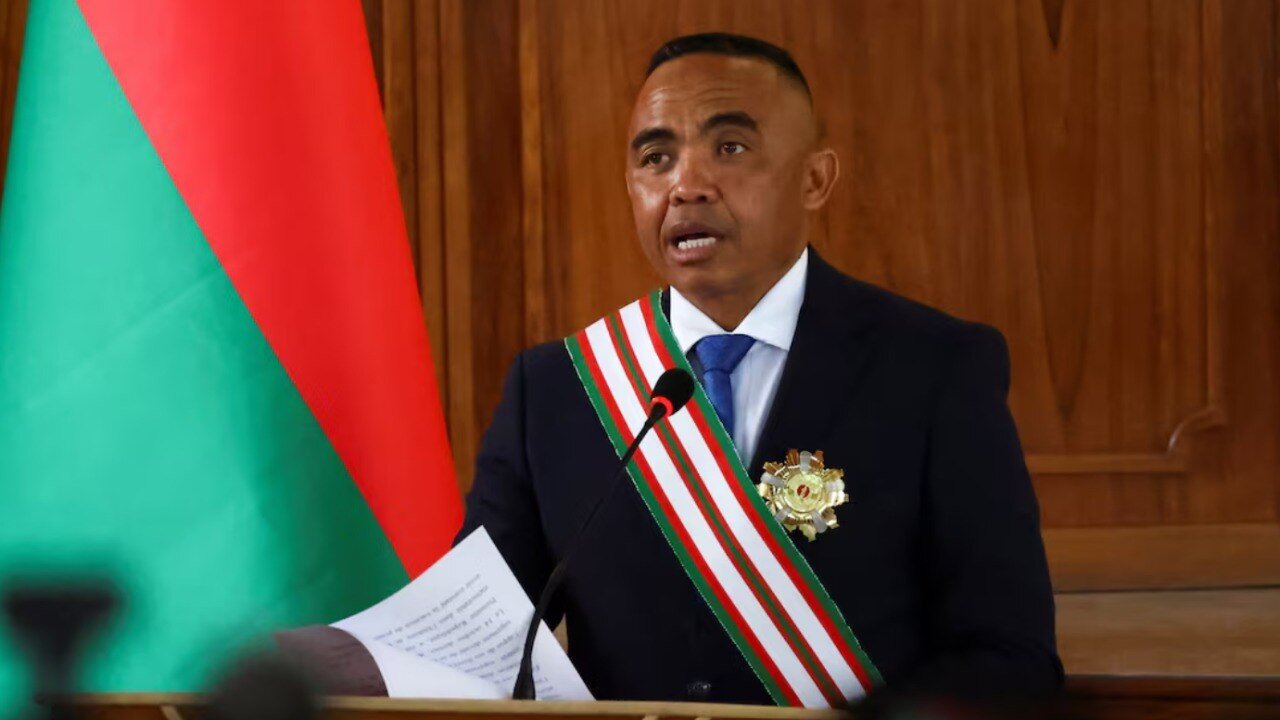

Colonel Michael Randrianirina officially assumed the role of Madagascar’s new president on Friday following a dramatic uprising led by the youth, resulting in the ousting of former President Andry Rajoelina. The inauguration ceremony, held at the High Constitutional Court, was marked by lively trumpets, raised swords, and enthusiastic crowds, reflecting both jubilation and uncertainty for the nation.
Despite facing condemnation and refusal to step down from ex-President Rajoelina, who fled the country over the weekend, the military’s control was swiftly endorsed by defections in the security forces and the High Constitutional Court.
The upheaval, sparked by weeks of protests by the younger generation known as “Gen Z,” stemmed from longstanding issues such as power and water shortages that significantly impacted Madagascar’s predominantly youthful population. While many youths celebrated Rajoelina’s downfall, caution was expressed regarding the rapid consolidation of military authority.
Randrianirina, a high-ranking officer in the elite CAPSAT army unit, vowed to uphold national unity and human rights during the ceremony at the historic High Constitutional Court. He announced the formation of a military-led committee in collaboration with a transitional government to govern for a period of up to two years before new elections are arranged.
Although not directly involved in the 2009 coup that brought Rajoelina to power, Randrianirina played a crucial role in the recent unrest by advocating for non-violence towards protesters and offering protection to dissident soldiers.
The coup has drawn criticism from the African Union and UN Secretary-General António Guterres, with international observers expressing concerns about Madagascar’s recurrent cycles of instability.
The underlying challenges in Madagascar, including widespread poverty and a youthful population, have contributed to the country’s turbulent political landscape. With three-quarters of the approximately 30 million inhabitants living in impoverished conditions and an average population age below 20, Madagascar’s economic struggles persist despite being a notable exporter of various commodities.
From vanilla to nickel, sapphires, and ilmenite, the country’s economic disparity is evident, with an average annual income hovering around $600 and staple goods like rice experiencing soaring prices. Over the years, from independence in 1960 to 2020, the GDP per capita has decreased significantly, highlighting the enduring economic challenges faced by the nation.