

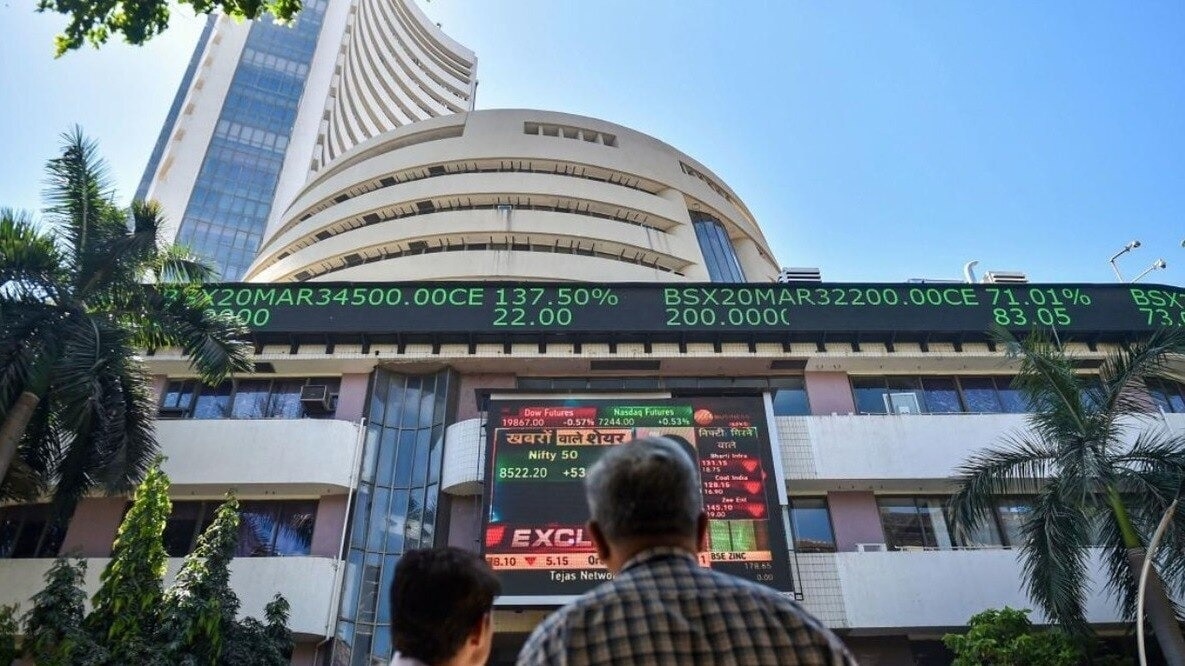

On Monday, benchmark stock market indices started off in the red, reflecting continued sluggishness in the markets due to a lack of positive catalysts, particularly the postponed US-India trade agreement, which is dampening investor morale.
As of 9:29 am, the S&P BSE Sensex had decreased by 394.84 points to reach 84,872.82, while the NSE Nifty50 fell by 129.75 points to settle at 25,917.20.
Dr. VK Vijayakumar, Chief Investment Strategist at Geojit Investments Limited, noted that the ongoing uncertainty surrounding the US-India trade deal remains a significant burden on the market. This situation is adversely affecting India’s exports to the US, contributing to a widening trade deficit and the persistent depreciation of the rupee.
“Market expectations suggest that India’s underperformance in 2025 will likely be offset in 2026. The country’s economic fundamentals are sound, and there has been robust policy support. The fiscal and monetary measures introduced to stimulate consumption and investment are starting to show results. If this momentum continues, it could provide a much-needed uplift to corporate earnings in FY27,” he stated.
Among the top gainers were Hindustan Unilever, which increased by 0.84%, Asian Paints, up 0.69%, UltraTech Cement, rising by 0.36%, Bharat Electronics, gaining 0.28%, and Tata Steel, which saw a 0.17% increase.
However, overall market sentiment remained weak as several major stocks pulled the index downwards. The biggest losers included Mahindra & Mahindra, which dropped by 1.19%, Bajaj Finserv, down 0.90%, Bajaj Finance, which fell by 0.81%, Adani Ports, down 0.78%, and Kotak Mahindra Bank, which decreased by 0.76%.
“Globally, a potential development is a decline in the AI sector. Recent earnings reports from AI companies in the US indicate some financial strain. If the AI market weakens, it could work to India’s advantage. Overall, the macroeconomic conditions are likely to favor India’s superior performance within the emerging market sector in 2026. However, prevailing high market valuations should temper expectations,” Vijaykumar remarked.
(Disclaimer: The opinions, views, recommendations, and suggestions expressed by experts and brokerages in this article are their own and do not necessarily represent the views of the India Today Group. It is recommended to consult a qualified broker or financial advisor before making any actual investment or trading decisions.)