

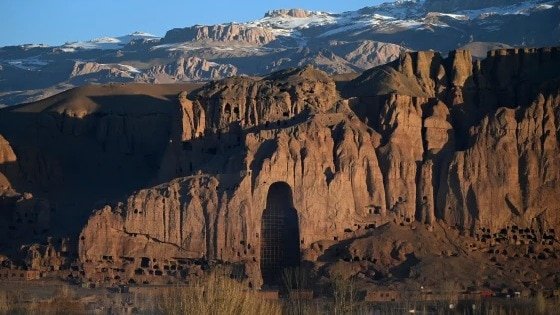

Earlier this month, during a press conference in Delhi featuring Amir Khan Muttaqi, the Foreign Minister of Taliban-led Afghanistan, the symbolism was evident. In the backdrop, a painting depicted the empty alcove of a Bamiyan Buddha destroyed by the Taliban in 2001. The destruction of the Bamiyan Buddhas, considered as shrines of non-believers by the Taliban, was a significant event under the leadership of Mullah Omar.
The remnants of the Buddhas continue to resonate, reflecting a lost heritage and the potential for restoration. As India cautiously re-establishes diplomatic relations with the Taliban, the story of the Bamiyan Buddhas remains poignant. Once symbols of peace and artistic expression, the Buddhas now symbolize decay and neglect.
The Bamiyan Valley, where the Buddhas once stood, faces ongoing threats such as looting, encroachment, and extremist activities. Efforts to revive the Buddhas have been hampered by poverty in the region, leading to the misuse of ancient caves meant for meditation as shelters for the homeless.
The destruction of the Buddhas in 2001 marked a turning point, with the statues falling victim to artillery, gunfire, mines, and rockets. The act was driven by ideological beliefs that deemed the statues as idolatrous. Two decades later, the void left by the Buddhas serves as a stark reminder of the region’s challenges and neglect.
While international initiatives have aimed to salvage the heritage of Bamiyan, the full reconstruction of the Buddhas remains unfeasible due to various constraints. The fate of the Buddhas now lies in the hands of the Taliban, raising concerns about the preservation of cultural heritage under the current regime in Afghanistan.
The absence of the Bamiyan Buddhas continues to echo a narrative of loss and the potential for restoration. As India navigates diplomatic engagements with Kabul, the Bamiyan relics stand as a testament to shared history and the enduring quest for preservation and reconciliation.