

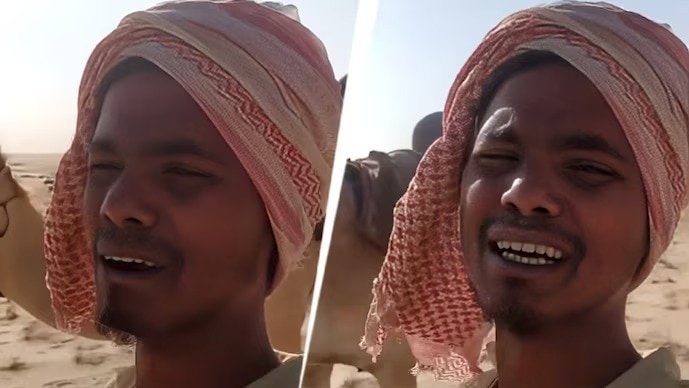

A video that went viral depicting an Indian worker in Saudi Arabia pleading for help to return home was revealed by Saudi authorities to have been created solely for social media attention. The Eastern Province Police’s media spokesperson stated that the Indian expatriate in question was called in for interrogation after the video circulated online, and it was discovered that he deliberately posted the content to boost views on his social media profile. Authorities confirmed that there were no issues between the worker and his employer and that appropriate legal measures had been initiated in collaboration with relevant entities.
The clarification followed the circulation of an emotional video featuring a man from Uttar Pradesh seeking assistance. In the footage, the individual, speaking in Bhojpuri, alleged that his sponsor was holding his passport and threatening him. He made an appeal to Prime Minister Narendra Modi and the public to share the video widely in order to reunite with his mother back home. The video, showing the distressed man with a camel in the background, gained rapid traction on social media platforms after a lawyer from Delhi shared it, tagging External Affairs Minister S Jaishankar and the Indian embassy in Riyadh.
In response to the widespread attention the video garnered, the Indian embassy mentioned its efforts to locate the man but faced challenges due to the lack of specific location details or contact information in the video. Contrary to the claims made in the video, Saudi police dismissed the allegations, emphasizing that the video was crafted solely for the purpose of increasing views and held no factual basis.
This incident unfolds amid Saudi Arabia’s recent decision to abolish the longstanding Kafala system, a sponsorship framework criticized as resembling modern-day slavery. The reform now allows foreign workers to change jobs and exit the country without requiring permission from their employers, a significant advancement for migrant workers’ rights.