

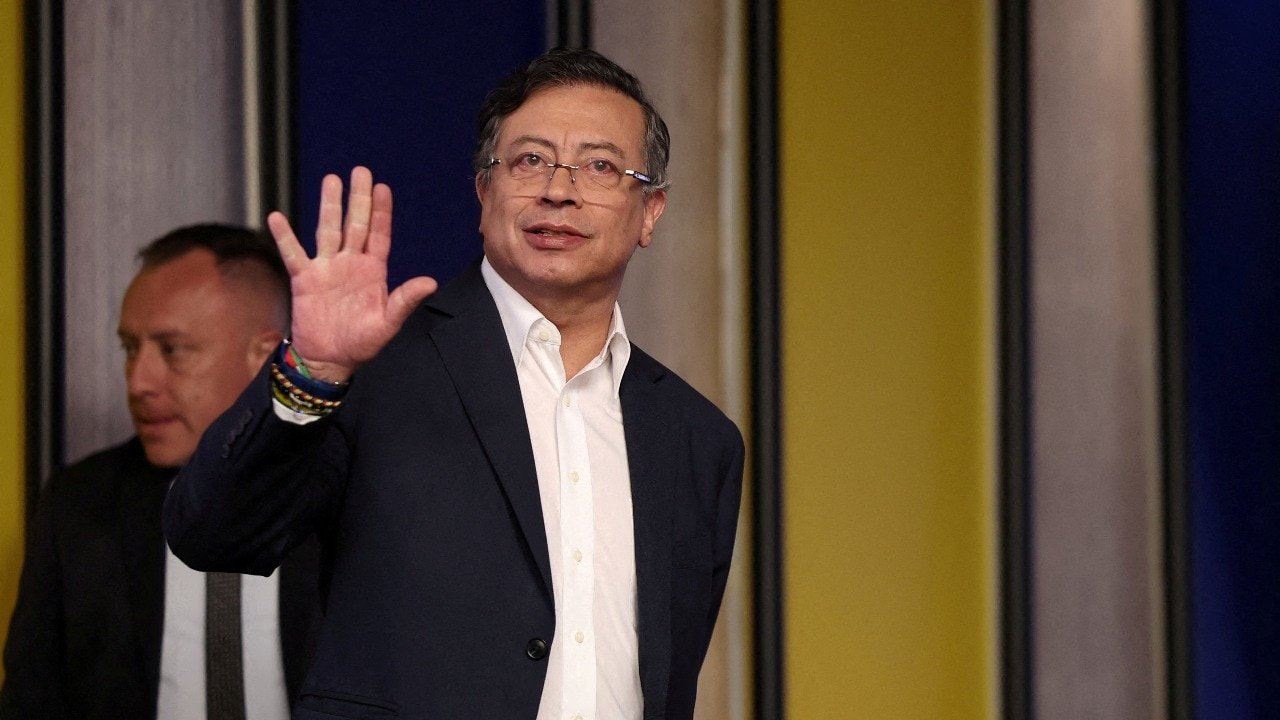

The United States has enforced sanctions against Colombian President Gustavo Petro and several high-ranking officials, accusing them of supporting drug traffickers and enabling a surge in cocaine production to unprecedented levels. The US Treasury Department’s Office of Foreign Assets Control (OFAC) disclosed the sanctions on Friday, identifying President Gustavo Petro and Colombia’s Interior Minister Armando Benedetti among four individuals newly placed on its “Specially Designated Nationals” list.
This designation effectively freezes any assets held in the US and prohibits American entities from engaging in any transactions with them. The department stated, “Treasury is imposing sanctions on the President of Colombia, Gustavo Petro, for his involvement in the global illicit drug trade. Under President Petro’s leadership, cocaine production in Colombia has surged to all-time highs. Petro has extended support to narco-terrorist groups. Under President Trump’s administration, we will not tolerate Colombia facilitating drug trafficking into our country and endangering Americans.”
These sanctions come after President Donald Trump’s recent decision to “decertify” Colombia as a dependable partner in the fight against narcotics, relegating the South American nation to a classification similar to Venezuela, Bolivia, Afghanistan, and Myanmar.
In response to the sanctions, President Petro criticized the actions, labeling them as “a paradox.” He expressed, “The threat made by Bernie Moreno has materialized; my children, my wife, and I have been included in the OFAC list. My legal representative in my defense will be Dany Kovalik from the USA.” Petro deemed the situation “a complete paradox,” stating, “Despite combating drug trafficking for decades and effectively reducing cocaine consumption in the society we aided significantly, this government measure has been imposed upon me. It is a complete paradox, but we will not retreat, nor will we surrender.”
President Petro had earlier accused the Trump administration of utilizing military force as a political tool rather than a genuine anti-narcotics strategy. He alleged that recent US assaults on suspected drug-smuggling vessels in international waters resulted in the deaths of innocent civilians. Petro condemned the US missile strikes as “war crimes,” highlighting that at least 37 individuals were killed before US Defence Secretary Pete Hegseth confirmed the targeting of six alleged “narco-terrorists” on Friday.
Petro argued that Washington’s tactics were misguided, emphasizing, “Eliminating the foot soldiers is straightforward, but to be truly effective, you must apprehend the masterminds behind the operations.”
In a deepening war of words, President Trump defended the strikes as “lawful operations against criminal networks that distribute drugs on American streets.” He criticized Petro, characterizing Colombia as a hub for drug activities and labeling its leader as “an inadequate thug.” Trump asserted that Colombia’s cocaine production had reached unprecedented levels, hinting at potential expanded US military operations beyond current air and sea targets until the drug supply chains are entirely dismantled.
Recently, two US B-1 bombers conducted a mission near Venezuelan airspace as part of what the Pentagon termed a “deterrence patrol.” Petro cautioned that any US violation of Colombian territory would constitute an act of aggression, potentially reigniting internal conflicts. Referring to his past involvement with the M-19 guerrilla movement, Petro warned that Colombian sovereignty must be respected, stating, “We can manage without US assistance or trade agreements if necessary, but we will not tolerate foreign aggression on our land.”