

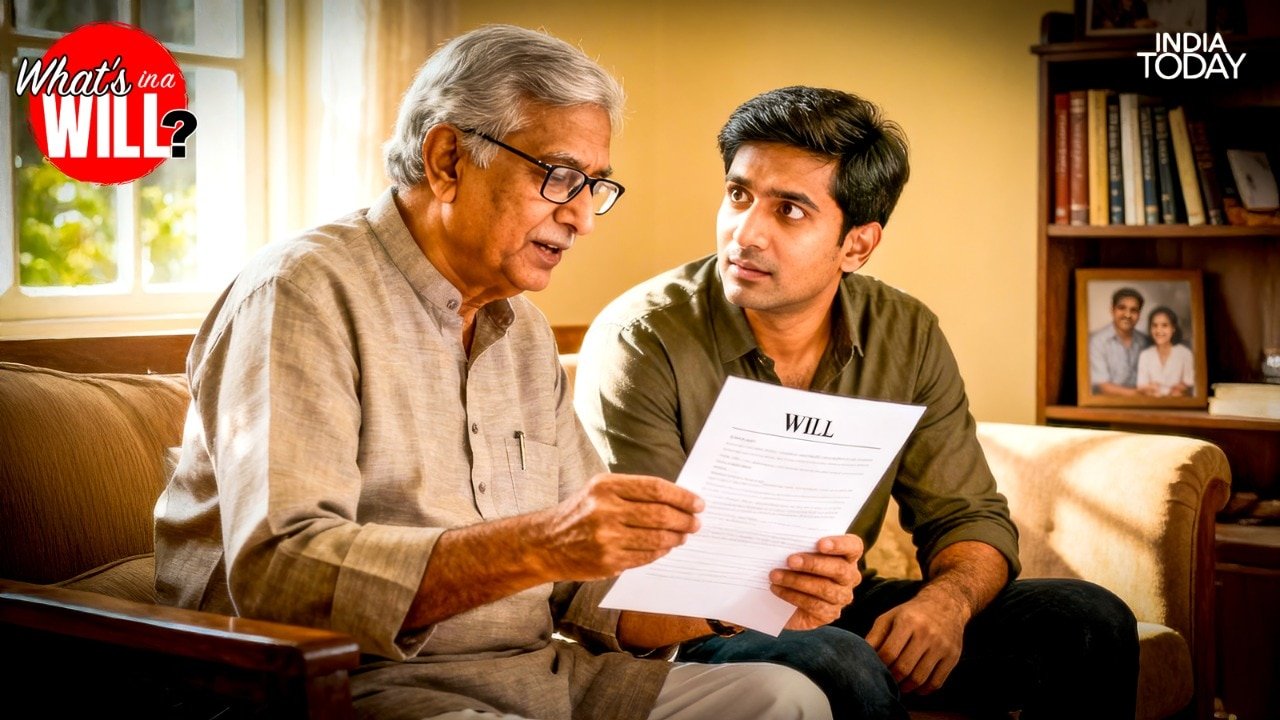

When the term “Will” is mentioned, what usually comes to mind? Perhaps thoughts of aging, sickness, or the end of life, rather than financial planning or wise money decisions. For many individuals in India, drafting a will is often a consideration reserved for later years, once gray hair appears or when children take over administrative tasks.
Contrary to common belief, a will serves a purpose beyond death; it offers guidance. It serves as a financial instrument to safeguard your accomplishments, provide security for your loved ones, and prevent contentious disagreements.
Regardless of whether you are a young professional, an entrepreneur, or just embarking on investment ventures, initiating the process of creating a will at an early stage can be one of the most prudent actions you take for your future.
### WHY WILLS ARE OFTEN ASSOCIATED WITH THE ELDERLY
Many individuals in India tend to link will creation with end-of-life scenarios or ill fate, as noted by Abhishek Kumar, a Sebi-registered investment advisor and the Founder of SahajMoney.
Due to cultural beliefs where preparing for death is deemed as tempting misfortune, there exists apprehension and unease regarding this subject. Kumar suggests that altering this mindset is possible through awareness initiatives and by presenting real-life instances of families entangled in disputes due to the absence of a will.
He emphasizes that estate planning should be perceived as an integral aspect of overall wealth generation, rather than a task confined to the elderly demographic. Kumar asserts, “It is essential for individuals to regard estate planning as a vital component of wealth creation, rather than a mere bureaucratic obligation for the elderly.”
### THE TIMING OF CREATING YOUR INITIAL WILL
Kumar advocates for creating a will as soon as an individual accumulates substantial assets or has dependents.
“A will should be made promptly upon acquiring significant assets like property or investments, or when one has dependents such as a spouse or children,” he advises.
He explains that estate planning is not solely for the affluent but for anyone seeking to ensure proper asset distribution to beneficiaries and evade legal entanglements.
While wills are commonly viewed as legal paperwork, they play a pivotal role in financial planning as well. Kumar underscores that a will brings clarity to asset distribution, minimizes family conflicts, and guarantees disciplined wealth transfer.
He underscores that integrating estate planning with wealth creation early on enables young professionals to safeguard their investments and preserve their legacy.
### PRACTICAL ADVANTAGES OF EARLY WILL CREATION
According to Kumar, there are tangible benefits to crafting a will early.
“It aids in averting family disputes over assets and provides financial security to dependents such as spouses and children,” he highlights.
Initiating planning early also offers peace of mind, allowing individuals to focus on wealth accumulation, secure in the knowledge that their assets are shielded and will be distributed according to their wishes in unforeseen circumstances.
### INTEGRATING DIGITAL ASSETS INTO YOUR WILL
In today’s digital era, individuals often overlook the inclusion of online assets, ranging from mutual funds to cryptocurrencies, in their estate planning. Kumar asserts that drafting a will early enables responsible management of these digital assets.
“Initiating a will early facilitates the management of digital assets by appointing a digital executor with legal authorization to access and transfer cryptocurrencies, demat accounts, UPI wallets, and online investment platforms posthumously without violating privacy regulations or custodian agreements,” he remarks.
He also notes that for mutual funds and securities regulated by Sebi, a will streamlines succession paperwork, allowing heirs to operate accounts seamlessly.
“Given that Indian courts recognize cryptocurrencies as inheritable property, specifying them in your will with clear access protocols offers legal clarity to heirs, preventing digital assets from becoming inaccessible due to forgotten passwords or seed phrases,” Kumar advises.
However, he cautions against directly including private keys or sensitive access details in a will, as they become public during probate proceedings.
### UPDATING YOUR WILL AS LIFE EVOLVES
Creating a will is an ongoing process that should adapt to changes in life and finances. “Individuals can revise their will as circumstances change by either drafting a new will that supersedes the previous one or by incorporating a codicil for minor adjustments,” Kumar recommends.
He suggests that individuals routinely review their wills every three to five years as standard practice, and especially after significant life events such as marriage, divorce, the birth or adoption of children, acquiring substantial assets, starting a business, or the passing of a beneficiary or executor.
While the idea of drafting a will may evoke discomfort or superstition for many, Kumar believes that awareness can alleviate such concerns.
“We address client reservations about drafting a will by empathetically understanding their sentiments and emphasizing that will creation is about safeguarding loved ones rather than inviting misfortune,” he states.
He frequently shares real-life anecdotes of families enduring legal and financial strains due to the absence of a will. “We reframe the dialogue from death to financial responsibility and legacy construction