

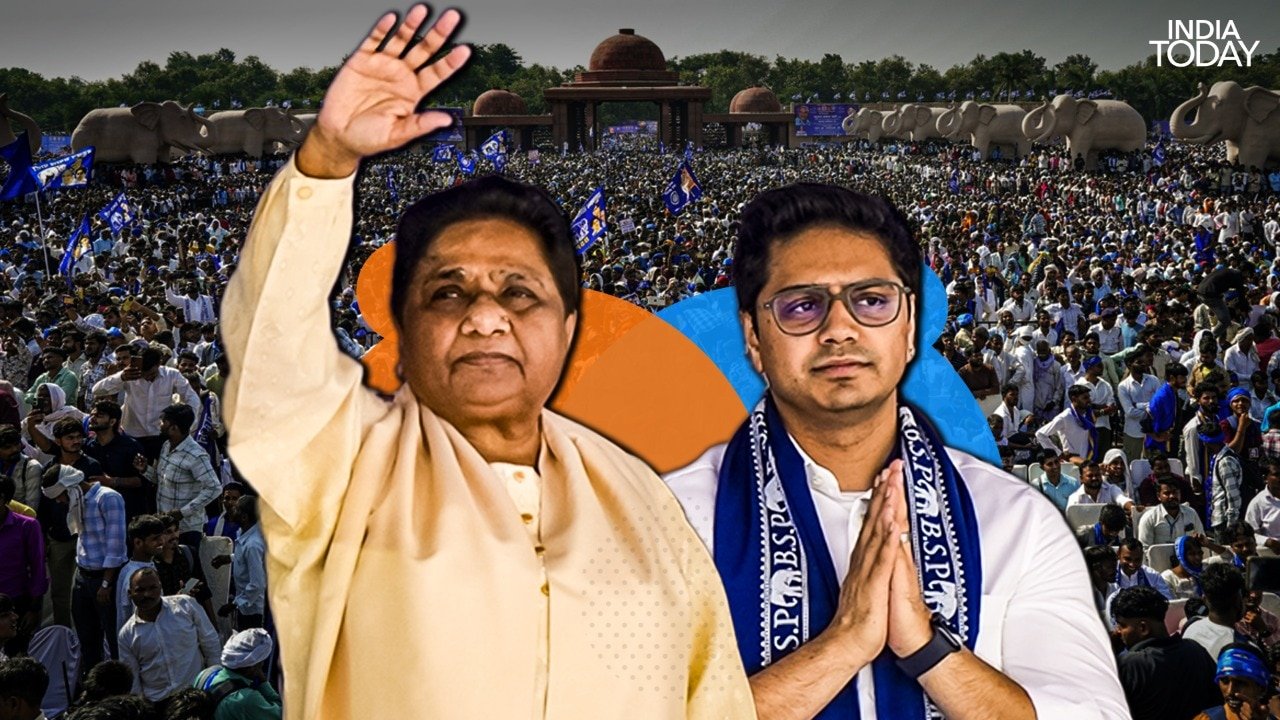

Four years after Mayawati’s impactful speech at the Shradhanjali Sabha in 2021, the former Uttar Pradesh Chief Minister made a powerful return to the same venue in Lucknow on Thursday. This time around, her presence was even more assertive and forceful. Describing the event where around two lakh party members gathered, an observer remarked that Lucknow, known as the city of nawabs, had now turned azure with BSP supporters. Despite significant setbacks in various political arenas, such as the Lok Sabha and Rajya Sabha, the BSP appeared vulnerable. However, the strategic timing of this massive gathering, nearly a year prior to the crucial 2027 UP Assembly elections, has sparked speculation about the party’s resurgence for the upcoming electoral battle.
Contrary to popular belief, the awakening of the elephant (symbolizing the BSP) was not a sudden occurrence. It had been a deliberate process, with meticulous planning and silent efforts, awaiting the opportune moment to make a resounding comeback. Mayawati’s decision to bring her nephew, Akash Anand, who she had anointed as her political successor, to the forefront further underscored the party’s renewed vigor. Reports suggest that the BSP had been diligently strengthening its grassroots connections for at least six months leading up to the rally, aiming to make a significant impact during the grand event.
On the 19th death anniversary of BSP’s founder and Dalit icon Kanshi Ram, a massive gathering of party workers and leaders from all corners of Uttar Pradesh converged on the state capital in a show of overwhelming strength. Mayawati, orchestrating the colossal rally at Lucknow’s Manyawar Kanshi Ram Memorial, seemed to break records for attendance after a prolonged period of electoral dormancy for the BSP.
During her impassioned hour-long speech, Mayawati sounded the bugle for the BSP’s electoral charge, launching scathing attacks on the Samajwadi Party and the Congress for allegedly disrespecting Dalits through hypocrisy and caste-based prejudices. She accused both parties of opportunism, labeling them as “two-faced” and highlighting their neglect of Dalit interests when in power.
By positioning the BSP as a unifying force against the Pichda-Dalit-Alpasankhyak (PDA) narrative championed by the SP-Congress alliance, Mayawati sought to galvanize Bahujans against what she termed as narrow-minded, casteist politics. The BSP’s strategic approach, evident in the rally’s massive turnout, aimed to counter perceptions of the party’s decline and reassert its political relevance ahead of the crucial Uttar Pradesh Assembly elections in 2027.
Although the BSP’s electoral fortunes have witnessed a decline in recent years, the party’s concerted efforts and groundwork leading up to the Lucknow rally indicate a potential resurgence on the horizon. Mayawati’s calculated moves, including the appointment of her nephew as the national coordinator and the party’s enhanced digital outreach, signify a strategic shift aimed at reclaiming lost ground and broadening the party’s appeal beyond traditional support bases.
As the BSP gears up for the electoral battle in Uttar Pradesh, the party’s renewed vigor and focused approach may disrupt the prevailing political landscape in the state. With internal cohesion and strategic maneuvering, the BSP appears poised to challenge the status quo and make significant electoral gains. The bugle has been sounded, signaling a potential revival for the BSP as it navigates the dynamic political terrain of Uttar Pradesh.