

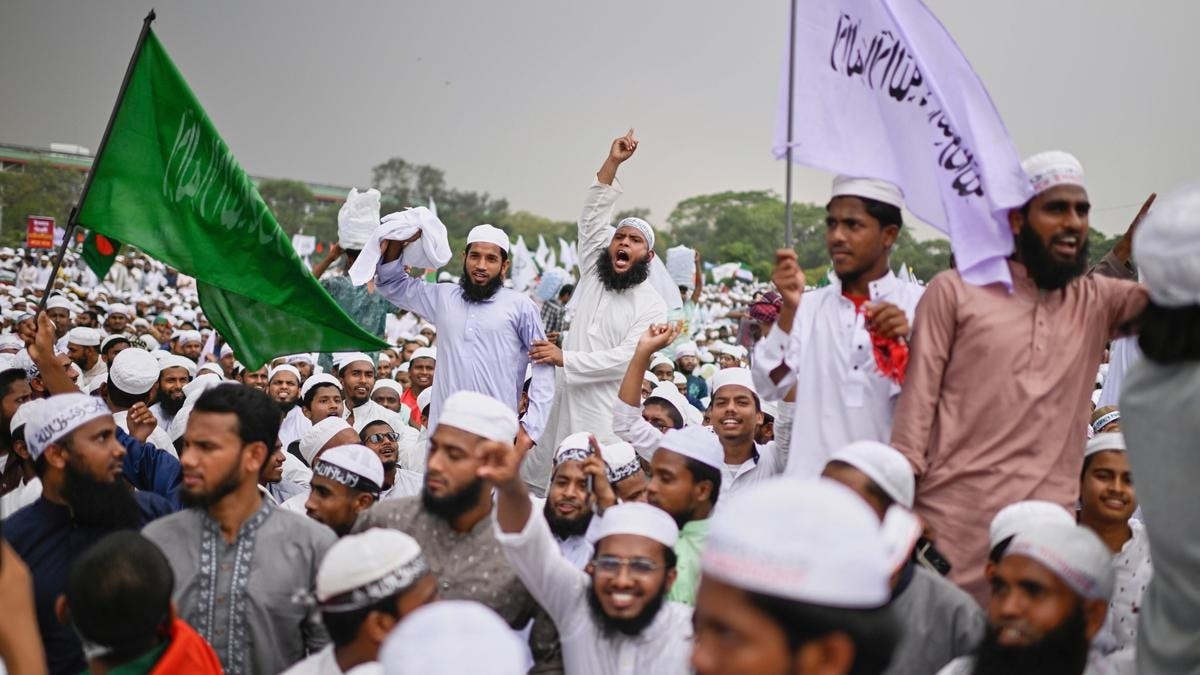

After months of strong opposition from Bangladeshi Islamists regarding the Muhammad Yunus government’s initiative to appoint music and dance instructors in primary schools, which they deemed an “un-Islamic agenda,” the interim government has now reversed its decision. On Monday, the Ministry of Primary and Mass Education in Bangladesh announced it would eliminate the newly established positions for music teachers in public primary schools. Additionally, the ministry has also removed the role of physical education teachers, as reported by BDNews24.
“The regulations issued last August included four categories of posts, but the amendment now incorporates only two categories. The roles of assistant teachers for music and physical education have been excluded from the updated regulations,” stated ministry official Masud Akhtar Khan.
When asked if the decision was influenced by religious groups, Akhtar Khan declined to elaborate, saying, “You can check for yourself,” as he responded to BDNews24.
This action reflects a hardening stance similar to the Taliban’s ban on music in Afghan schools. While Bangladesh may not be fully there yet, it appears to be gradually moving towards increased religious conservatism. This reflects a Taliban-like mindset driven by radical influences.
The Yunus administration’s reversal is part of a series of policy shifts in which it has succumbed to Islamist pressures. In Bangladesh, Islamists, previously kept in check under the ousted PM Sheikh Hasina, now feel more assertive under Yunus’s leadership. They are emerging with increasing boldness, propagating anti-Hindu and anti-India sentiments. Recently, they have called for a ban on Iskcon, labeling it an “extremist organization.”
The Islamists insisted that government-operated primary schools should hire only religious educators and threatened to take to the streets if their conditions were not met. They described the hiring of music and physical education teachers as “unnecessary and forced,” according to the Dhaka-based Daily Star in September.
ISLAMISTS CLAIM YUNUS GOVT HAS AN ANTI-ISLAMIC AGENDA
During a September gathering organized by the Jatiya Olama Mashayekh Aima Parishad, which included hardliners from Jamaat-e-Islami, Islami Andolon Bangladesh, Khelafat Majlish, and Bangladesh Khelafat Andolon, the radicals asserted that the initiative was “indirectly linked to an atheistic philosophy aimed at instilling disbelief in future generations and corrupting schoolchildren.”
Speaking at the event, Islami Andolon Bangladesh leader Syed Rezaul Karim remarked, “When we were children, we had separate teachers for Hindus and Muslims in religious studies. Now, you want to appoint music teachers? What will they teach? What are your real intentions? You want to turn our children into disrespectful, unruly individuals? We will never accept that.”
He cautioned that the “Islam-loving and religion-respecting citizens” of Bangladesh would take to the streets if the Yunus administration ignores “their demands.”
The Deobandi Islamist group, Hefazat-e Islam, condemned the government’s actions as an “anti-Islamic agenda” and called for the cancellation of the recruitment regulations.
ISLAMISTS PRESSURED YUNUS ADMINISTRATION ON WOMEN’S REFORMS PANEL
The recent reversal by the Yunus administration follows months of warnings from Islamists against advancing the proposals set forth by a women’s reform commission. One Islamist group threatened that the interim leaders “wouldn’t have five minutes to escape” if they pursued such initiatives. This was a reference to the 45 minutes Sheikh Hasina reportedly required to flee Bangladesh in August 2024.
In July and August 2024, student protests were infiltrated by Islamists, whose violent actions compelled Sheikh Hasina to escape, subsequently facilitating the appointment of Muhammad Yunus as the leader of the interim government.
A year later, the Yunus administration’s choice to eliminate the music and physical education teacher roles in primary schools follows months of vigorous opposition from Islamist factions, who branded the initiative as an “anti-Islamic agenda.” This concession illustrates how the interim government has empowered hardliners to a point where they are now shaping policy, undermining secular education in a country renowned for its cultural diversity.