

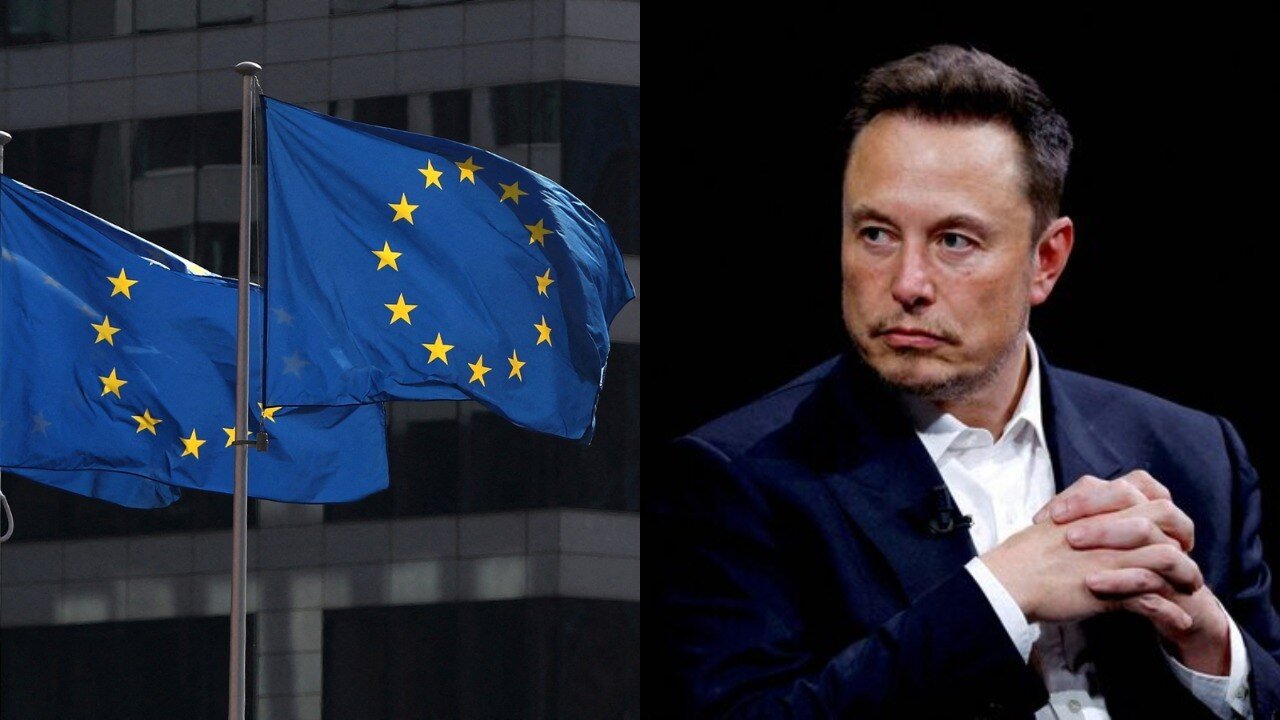

Elon Musk, a prominent figure worldwide, holds significant influence in various sectors, including politics. Recently, Musk clashed with the European Union (EU) over a substantial €120 million ($140 million) fine imposed on his social media platform, X. Here’s an overview of the situation.
The EU imposed the fine on X under the Digital Services Act (DSA). The European Commission accused the platform of deceiving users through its blue checkmark system and failing to grant researchers access to essential data, particularly targeting users subscribed to the Premium plans. These actions were deemed as a “deceptive design” and lacked transparency in advertising, potentially leaving users vulnerable to manipulation and fraudulent activities. This marked a significant enforcement under the DSA, the first of its kind involving a major tech company.
The investigation leading to the penalty commenced in December 2023 and intensified during Musk’s advisory role to former President Trump. Henna Virkkunen, the digital chief of the European Commission, highlighted the thorough process undertaken to ensure a robust legal foundation for the penalty.
In response to the fine, Elon Musk criticized the EU on X, advocating for member states to reclaim their sovereignty for the benefit of their citizens. Musk expressed his views by stating, “The EU should be abolished, and sovereignty returned to individual countries, so that governments can better represent their people.” He reiterated his stance when a user reposted his comments, emphasizing his seriousness on the matter and distinguishing his critique of the EU bureaucracy from his admiration for Europe.
US Vice President JD Vance supported Musk amid the dispute, emphasizing the importance of free speech and criticizing the EU for targeting American companies. Vance and Musk share a positive relationship, with Musk playing a significant role in supporting President Trump’s election campaign and establishing the Department of Government Efficiency (DOGE).
The European Union consists of 27 member states, such as Germany, France, Spain, and Belgium, operating as a major governmental entity. The penalty on X aligns with the EU’s broader crackdown on tech giants, with companies like Apple, Meta, and Google also facing substantial fines in recent times. X has been given a timeframe of 60 days to propose solutions and 90 days to implement changes; failure to comply may lead to additional penalties. Musk intends to challenge the penalty in court, potentially prolonging the regulatory conflict.
The EU’s actions reflect a trend of increased scrutiny and enforcement within the tech industry, showcasing the regulatory landscape’s evolving dynamics and the challenges faced by major corporations operating in the digital sphere.