

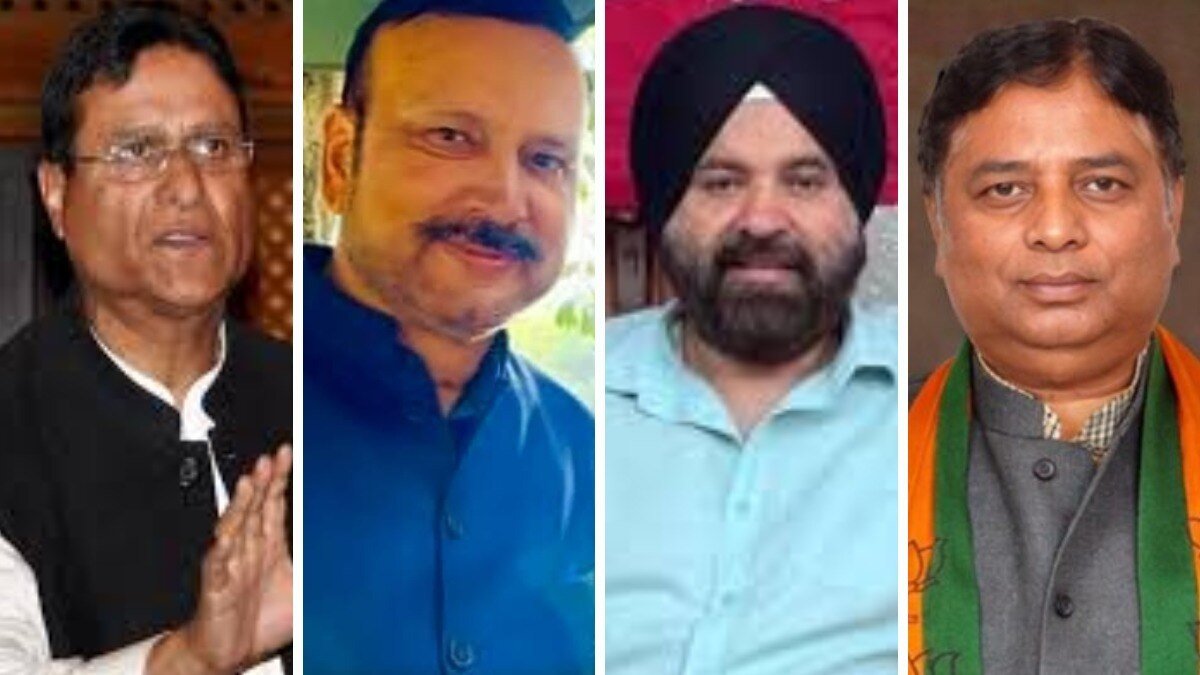

In the latest Rajya Sabha elections held in Jammu and Kashmir after the revocation of Article 370 in 2019, the National Conference led by Omar Abdullah clinched three out of the four Rajya Sabha seats, with the remaining seat secured by the opposition BJP.
Chowdhary Mohammad Ramzan of the National Conference emerged victorious over BJP’s Ali Mohammad Mir in the first seat, garnering 58 votes out of the 87 cast, while the BJP received 28 votes, with one vote deemed invalid, as confirmed by M K Pandita, the Returning Officer from the Legislative Assembly. In the second contest, Sajad Kichloo of the National Conference triumphed over BJP’s Rakesh Mahajan by securing 57 votes against Mahajan’s 29, with two votes rejected.
For the third seat, the National Conference fielded G S (Shammi) Oberoi and Imran Nabi Dar, while the BJP nominated Sat Sharma as its candidate. Oberoi received 31 votes, Dar secured 21 votes, and Sharma garnered 32 votes, with three votes declared invalid. Notably, the BJP seemed to have gained four additional votes, possibly from Independent candidates.
Following the announcement of the results, Chief Minister Omar Abdullah congratulated the winning candidates from his party and raised concerns about the BJP’s surplus votes, alleging that some lawmakers who had pledged support to the National Conference might have switched sides to support the BJP.
The People’s Democratic Party (PDP), which had supported the National Conference to counter the BJP, also welcomed the election outcomes. Mehbooba Mufti, the PDP president, congratulated the victors and expressed optimism that they would represent the people of Jammu and Kashmir effectively in Parliament. Tariq Hameed Karra, the J&K Congress chief, commended the National Conference for securing three seats and putting up a strong fight for the fourth.
However, the election faced criticism from People’s Conference chief Sajad Lone, who labeled it as a “fixed match” between the National Conference and the BJP. Lone abstained from voting, alleging potential coordination between the two parties.
Imran Nabi Dar, the unsuccessful National Conference candidate, accused the BJP of engaging in “horse-trading” to secure the victory, claiming that inducements had influenced the outcome. Celebrations erupted among National Conference supporters outside the J&K Legislative Assembly Complex, while BJP workers celebrated Sat Sharma’s win.
This election marked the end of a four-year gap in Jammu and Kashmir’s representation in the Rajya Sabha. The voting process took place at the Jammu and Kashmir Legislative Assembly Complex in Srinagar, with three polling booths set up on the premises. Over 70 MLAs, including Chief Minister Omar Abdullah, cast their votes, and the results were announced late in the evening after the counting process concluded.