

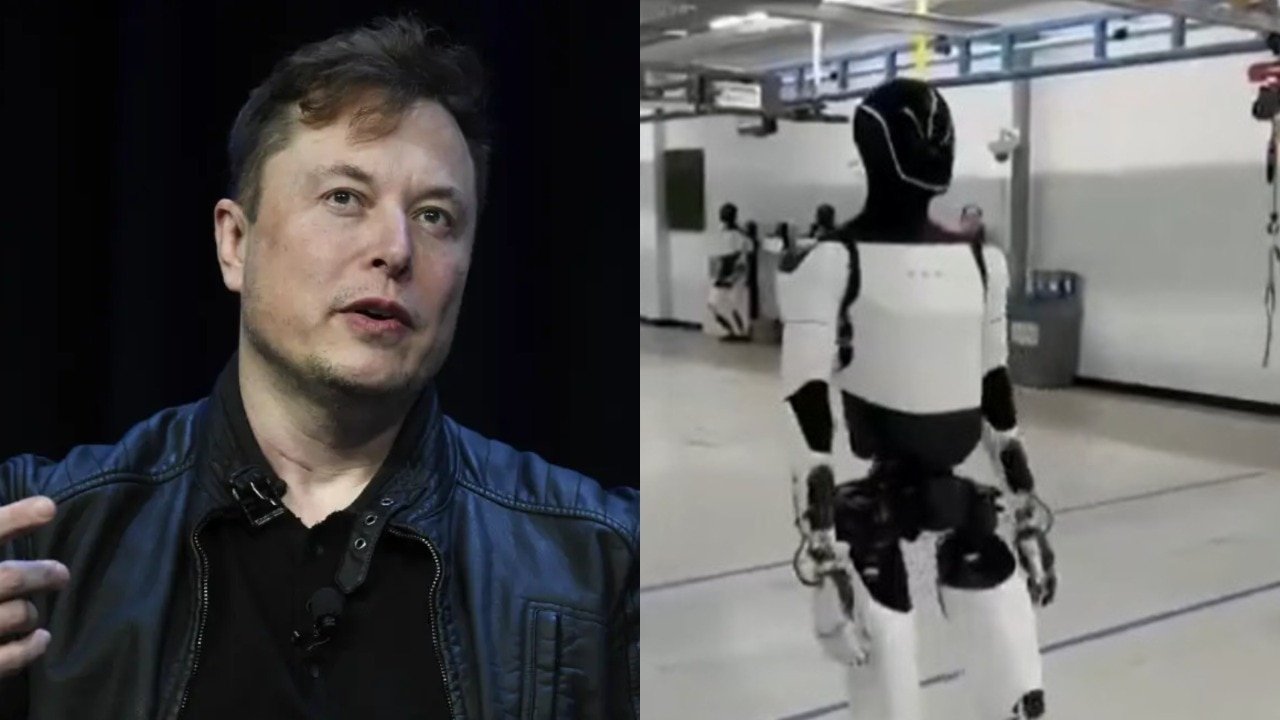

Elon Musk, known for his forward-thinking concepts, made a bold statement during Tesla’s recent shareholder meeting. He suggested that in the future, individuals might be able to transfer their consciousness, memories, and personalities into Tesla’s humanoid robot, Optimus. Musk indicated that the technology to achieve this digital replication of the mind and its transfer into a robotic form could potentially be developed within the next two decades.
Responding to an audience question about the possibility of human consciousness residing in Optimus, Musk expressed cautious optimism. He mentioned the potential use of Neuralink technology to create an approximate snapshot of a person’s mind, which could then be uploaded into an Optimus body. While acknowledging that this capability is not immediate, Musk envisioned it becoming feasible in less than 20 years.
The concept proposed by Musk has drawn comparisons to science fiction narratives, but the Tesla CEO appeared resolute and confident in the feasibility of his timeline.
Optimus, introduced by Tesla in 2021, is envisioned as an autonomous humanoid robot designed to perform repetitive or hazardous tasks. Unlike the human-like androids often depicted in movies, Optimus features a sleek, futuristic design with mechanical aesthetics. Standing at approximately 5 feet 8 inches tall and weighing around 56 kilograms, Optimus can walk, lift objects, and execute various everyday tasks, such as moving items, assembling components, or assisting in domestic activities.
Powered by Tesla’s artificial intelligence technology, the same system used in their self-driving vehicles, Optimus is intended to evolve from an industrial worker to a household assistant capable of safe interaction with humans. Musk’s recent remarks, however, extend beyond mere automation, suggesting the potential for transferring a person’s “mind snapshot” into an Optimus robot through Neuralink. He noted that while the transferred individual may not be exactly the same, the likeness would be close, albeit with some differences due to the new robotic form.
In addition to the mind uploading concept, Musk envisions Optimus as a transformative force for society. He believes that humanoid robots like Optimus could play a pivotal role in eradicating poverty by revolutionizing the workforce. Musk argues that with robots handling manual and repetitive labor, individuals could redirect their focus towards creativity, education, and innovation rather than basic survival.
Furthermore, Musk aims to make Optimus affordable for widespread adoption, foreseeing a future where every household could potentially own one. He views this project as potentially more impactful than Tesla’s automotive business, with the potential to significantly reduce costs and enhance global productivity by delegating most physical tasks to robots like Optimus.
While Musk’s vision may sound revolutionary, whether it materializes remains uncertain. Nevertheless, given Musk’s track record of realizing seemingly impossible feats, from reusable rockets to electric vehicles, his perspectives on the future often spark global interest and debate.
As Optimus continues its developmental journey, mastering basic functions like walking and task execution, Musk’s predictions, if even partially accurate, could redefine the essence of humanity. The reception of this potential future may vary widely among individuals, ranging from excitement to apprehension.