

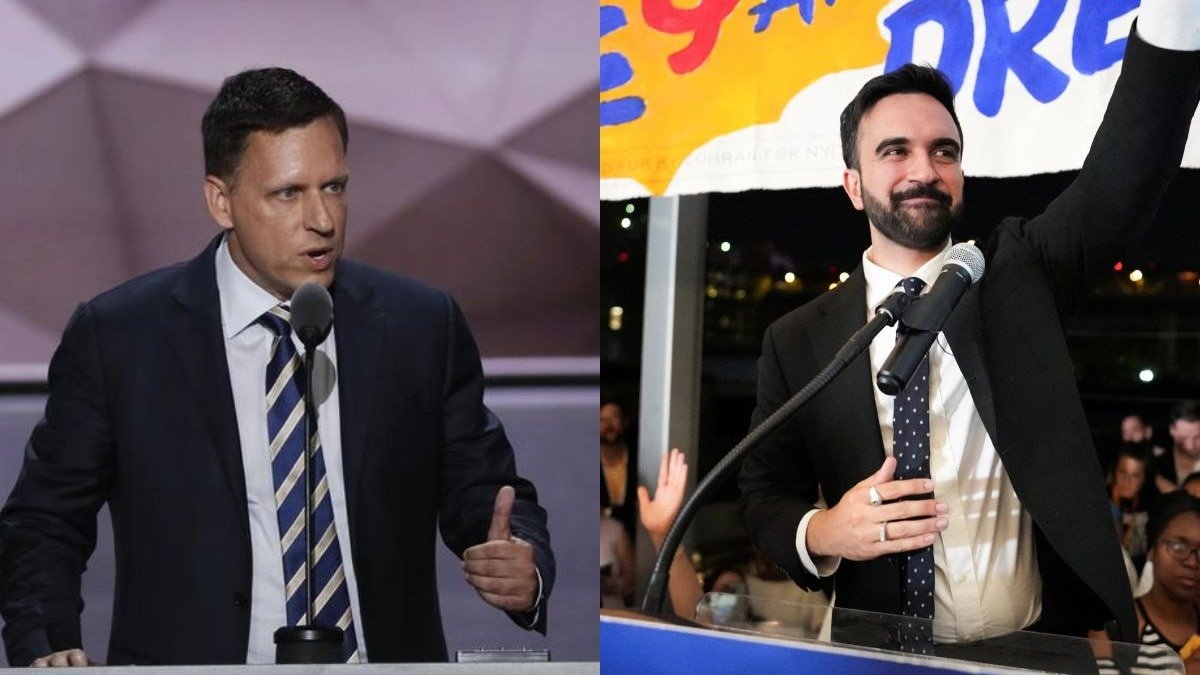

If you’ve been keeping up with the latest news, you’ve likely come across the buzz surrounding the newly elected mayor of New York City, Zohran Mamdani. Amidst Mamdani’s rise to office, another prominent figure making headlines is Peter Thiel, a renowned tech guru highly regarded in Silicon Valley and known for his mentorship of individuals like Elon Musk. Thiel, however, has not been complimentary towards Mamdani, with his past comments on the downsides of capitalism resurfacing in light of the mayoral election results.
Thiel’s perspective contrasts sharply with the stance taken by much of the Silicon Valley tech community regarding Mamdani. The new mayor has made promises to enforce more stringent taxation on billionaires and has brought onboard Lina Khan, known for her efforts to curb monopolistic behaviors of tech giants during the Biden administration. Leading up to the New York elections, Elon Musk frequently criticized Mamdani, urging voters not to support him. Musk’s campaign against Mamdani garnered support from numerous influential figures in the tech and venture capital sectors.
Following Mamdani’s victory, discussions have shifted towards analyzing the election outcome, reigniting interest in Thiel’s previously expressed opinions. Thiel, a prominent figure in Silicon Valley, has long voiced concerns about the shortcomings of capitalism, particularly its impact on younger generations. In a 2020 email to key Silicon Valley figures, Thiel cautioned against dismissing the growing support for socialism among millennials, attributing it to pressing economic issues such as mounting student debt and unaffordable housing.
Thiel’s remarks have gained renewed attention following Mamdani’s win, especially given the significant influence of the tech industry within the capitalist system. As tech companies have produced a substantial number of millionaires and billionaires in recent years, a vocal faction within the tech community advocates for expanding capitalist principles. This group often reacts strongly to leftist victories in elections, not only in the US but also across Europe and Asia.
Known for his roles in co-founding PayPal, supporting early-stage Facebook, and backing ventures like Palantir, Thiel has played a pivotal role in shaping the mindset of Silicon Valley over the years. His close relationships with tech leaders such as Musk and Zuckerberg, coupled with his ties to the political sphere, including associations with the Trump administration, underscore his significant influence.
In a recent interview with The Free Press, Thiel reiterated his concerns about the state of capitalism, emphasizing the affordability crisis as a key factor shaping modern political landscapes. He highlighted the challenges faced by millennials burdened with substantial student debt and hindered by soaring housing costs, suggesting that these factors could drive a shift towards anti-capitalist sentiments.
Thiel’s observations highlight the generational disparities exacerbated by economic factors like housing affordability and student debt, signaling a potential shift in political ideologies. As discussions around Mamdani’s win continue, Thiel’s reflections on the current state of capitalism remain pertinent, particularly in light of the tech industry’s growing influence in shaping economic and political landscapes.