

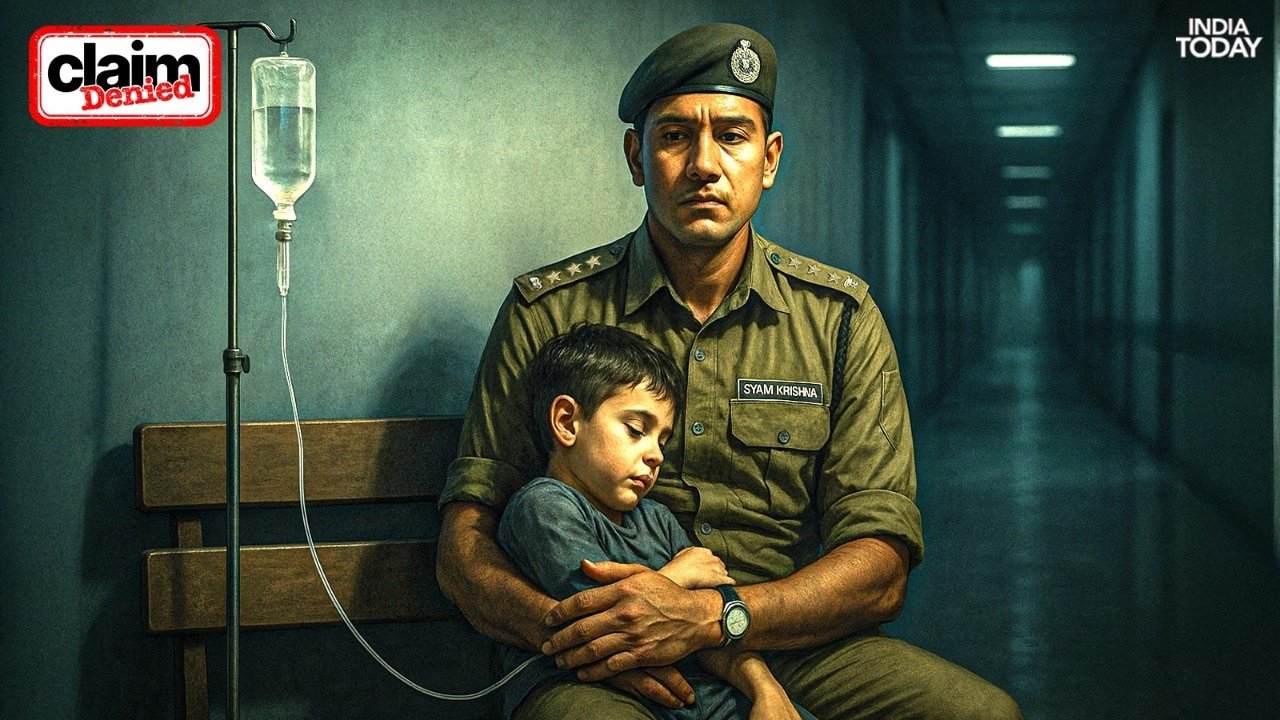

In the intricate world of health insurance in India, the authority to recommend hospitalization is increasingly shifting from doctors to insurers. Syam Krishna, a 34-year-old Assistant Commandant in the CRPF, encountered this shift in June 2025 and shared his story with IndiaToday.in.
His son, Samarth Bhat, a four-and-a-half-year-old autistic child who is nonverbal, fell severely ill in Tura, a remote town in Meghalaya lacking adequate medical facilities, located more than 200 km away from Guwahati.
Samarth’s health deteriorated despite initial treatment at the district hospital in Tura. On May 30, 2025, doctors prescribed medications for fever, vomiting, and poor appetite, but his condition did not improve significantly. Concerned by his worsening state on June 16, Syam and his wife, Spoorthi Bhat, a BSF Assistant Commandant on child care leave from Amritsar, took him back to the district hospital in Tura.
Despite receiving antibiotics, Samarth’s fever persisted, worsening his condition with ongoing vomiting and refusal to eat. Weak from inadequate nutrition, his parents made the tough decision to transport him to Guwahati’s Apollo Excel Care Hospital, a six-hour journey through challenging terrain.
At Apollo, doctors reviewed Samarth’s medical history, ruling out typhoid but deeming his condition serious enough for immediate hospitalization. He received intravenous fluids, antibiotics, and continuous monitoring, leading to a diagnosis of “viral fever with dehydration.”
Although Samarth’s health improved post-treatment, the battle was far from over for his parents.
Upon submitting a cashless claim, Care Health Insurance denied it, asserting that hospitalization was unnecessary based on policy terms, citing an exclusion code for primary admission for evaluation rather than treatment. They also questioned the couple’s claim history, hinting at potential policy misuse due to prior claims.
Syam expressed disbelief at the insurer’s stance, emphasizing that they resorted to local hospitals due to their remote postings and followed medical advice faithfully. The insurer’s demand for the couple to retrieve hospitalization documents from Guwahati despite regulations stipulating otherwise added further distress.
Seeking justice, Syam and Spoorthi approached the Insurance Ombudsman in Guwahati, resulting in a favorable ruling in their favor. The Ombudsman deemed the claim denial unjust, ordering the insurer to pay the claimed amount with interest.
While Syam acknowledged the monetary award, he highlighted the emotional toll of the ordeal and stressed the need for stricter penalties against insurers denying claims without valid reasons.
This case mirrors a broader trend of health insurance claim rejections in India, reflecting the challenges genuine policyholders face navigating the healthcare and insurance dynamics. The complexities between insurers and hospitals often leave individuals like Syam and Spoorthi grappling with uncertainty and delays in claim settlements.